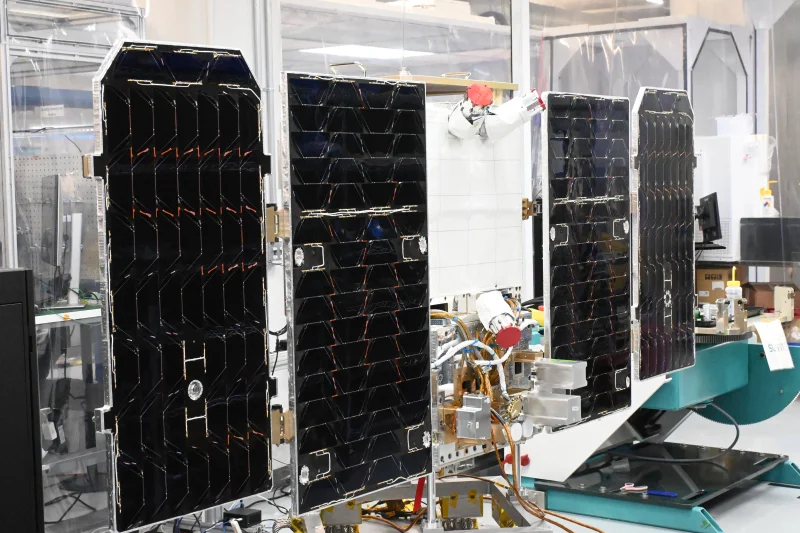
Google Project Suncatcher satellite

A prototype of the Project Suncatcher satellite at the Planet Labs facility in San Francisco, California.

The prototype satellite has four specialty chips in it called Tensor Processing Units, or TPUs, that Google designed for machine learning and has already deployed in data centers on Earth. The chips will run a version of the company’s Gemma AI model for 15 minutes at a time due to heat management constraints, using the open weight model to answer simple queries. In a blog post, Google said the mission will gauge how the TPUs handle “the physical stress of spaceflight and the radiation and thermal extremes of space.”
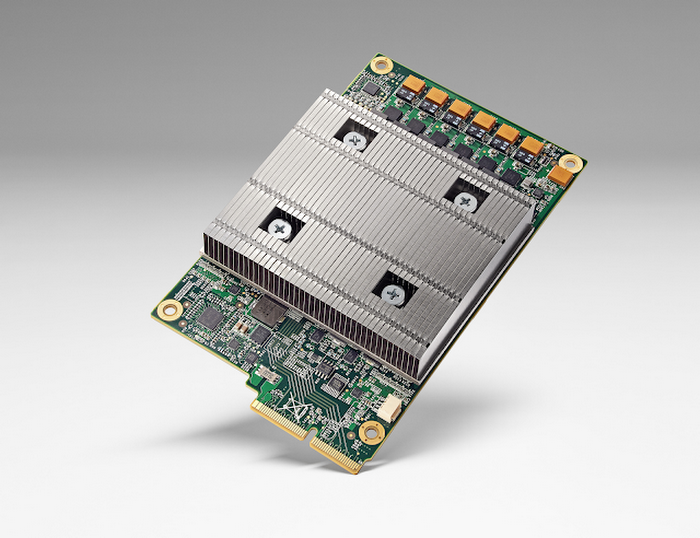

Google TPU

The Tensor Processing Unit (TPU) is a neural processing unit (NPU) application-specific integrated circuit (ASIC) developed by Google for neural network machine learning.[2] Tensorflow, Jax, and PyTorch are supported frameworks for TPU.[3] Google began using TPUs internally in 2015, and in 2018 made them available for third-party use, both as part of its cloud infrastructure and by offering a smaller version of the chip for sale. Currently, Google Cloud generates product revenues primarily from the sale of TPU systems.

Project Suncatcher

Google has sent its AI chips into space aboard a prototype satellite for Project Suncatcher.

Built with Planet, the spacecraft launched on SpaceX’s Transporter-18 mission on October 1. Google says contact is established and the satellite is operating normally. The experiment will study how its TPU chips handle radiation and temperature extremes.

It is an early step toward exploring future AI data centers powered by sunlight in orbit, with long-term performance and commercial feasibility still to be established.